Tuesday, June 22, 2021
Worship Channel from Charlot Lampa
Video creation and posting it to social media has been one of the trends. May it be in FB, Youtube, Instagram and even Tiktok, videos are making part of the lives of people at all ages. But one of the starters is making Worship videos in her Youtube Channel. Charlot Lampa just has launched her channel which aims to glorify the Lord.
Charlot loves to worship that Lord through her guitar. Of course as a worship leader in her church, it is just normal for her to sing unto the Lord. With all the passion that she has for God, it is time for her to have a larger audience.
Currently, all her YouTube videos are cover songs from other artists. Her favorite songs include I Could Sing of Your Love Forever and When I Speak Your Name. She loves also JIL Worship. Charlot hails from Binalonan, Pangasinan.


Saturday, May 22, 2021
Just to Please You
Charlot Lampa rendered a commemorative cover of the song "Just To Please You" by Mayor Joni Villanueva. The 21-year-old youth from Binalonan also played guiter while singing.
According to Charlot, the song has been her inspiration in serving God more.
She stated:
“Just To Please You” inspires me to do more for the glory of God despite of what others say.
A lot of people may doubt your capabilities because of your shortcomings especially when you don't meet their high expectations. But through the song of Mayor Joni Villanueva 'JUST TO PLEASE YOU', it reminds us that people should not be the jury of your abilities. As long as you do it for the Glory of God, stand with faith and know that it pleases the Lord.
#MJVJustToPleaseYou
Monday, June 19, 2017
Mayweather vs McGregor
Mayweather faces McGregor in what is considered one of the biggest boxing fights this year.
Monday, July 28, 2014
My Cousin's wedding
Several years ago, I was invited by my cousin James to attend to his wedding. Separated by thousands of miles, I was hesitant to go because I didn’t have the money for my airplane ticket. However, to my surprise, he provided my airfare.
It was in his wedding day with a reunion would happen. I expected that other members of his family would there to be introduced to me. It had been almost five years since I met them. It was the time for us to enjoy the moment.
I was observant in his wedding. Everything was orderly prepared at the reception. The decoration of the stage at the reception was captivating. Also, the tent that they used to further extend the area was amazing.
My cousin told me about the preparation of his wedding. He said that he was satisfied the service crew, dance floor, flooring and staging, and even the arrangement of the chairs. He also added the tent was rented at the USTentRental.com.
Surely, to hasten the preparation of such a big event, the service of a company is needed. Choosing the perfect services will produce impact in every occasion.
A wedding that is well-planned with ballroom that will emblazon the look from a visitor’s side can be crucial. Depending on the number of attendance in the wedding, a floor plan and theme can significantly alter the perception of the guests.
A properly designed tent for the party will absolutely make all the guests happy. Because of being wise in choosing the right tent for a given occasion, the event will always turn into success.
The tables, chairs and lightings are vital to the party. These things will affect the complete outlook of the event. No matter how wonderful the church wedding ceremony if the venue of the wedding is not properly arranged, the beauty of the occasion is not fully felt.
My Cousin's wedding
Tuesday, October 26, 2010
Thursday, October 14, 2010
Tuesday, October 12, 2010
Wednesday, March 21, 2007
Manila-Dagupan Railway, What happened?

It's like Pantranco which evaporated from mine own eyes, the Manila-Dagupan Railway was abandoned. How we need to have this railway back hence going to Manila now takes longer than before because of the unforeseen multiplications of vehicles.
I saw some broken rails in Dagupan. Can you give us some info about how and why the railroad was abandoned?
Saturday, March 3, 2007
Election 2007 in Pangasinan
Pangasinan is still one of the most registered provinces in the country. According to Comelec, there are 1.3 million registered voters in the province. No wonder why the opposition candidates are hovering and visiting the province first.
The administration candidates were not in slumber, they passed here also coinciding with town fiestas.
Pangasinan is large that if a senatoriable can get a million here, then he/she needs at least 8 million more to win.
The administration candidates were not in slumber, they passed here also coinciding with town fiestas.
Pangasinan is large that if a senatoriable can get a million here, then he/she needs at least 8 million more to win.
Wednesday, February 14, 2007
Jose Torres Bugallon
Jose Torres Bugallon, great military strategist in the Filipino-American War, was born on August 28, 1873 in Salasa (now Bugallon), Pangasinan to Jose Asas Bugallon. His father came from Baliwag, Bulakan; his mother was of the well-known Gonzales family of Pangasinan.
After elementary schooling in Salasa, he went to San Isidro Nueva Ecija where he completed in 1882 the first and second years of the secondary course under Don Rufino Villaruz. In 1886, he enrolled at the Colegio de San Juan de Letran, completed the secondary course and earned the Bachelor of Arts degree in 1889, with high scholastic ratings.
After his graduation he entered the Seminary of San Carlos with the intention of becoming a priest although his real love was the military. Having passed the validation examination given by the Spanish government in 1892, he went abroad as a pensionado of the government to the world-famed Military Academy at Toledo, Spain where he spent three years of concentrated study in the science of military organization and warfare.
In 1896, he graduated as 2nd Lieutenant. Upon his return to the Philippines that same year, he joined and served with the 70th Infantry Regiment of the Spanish Army. He fought several battles and after the battle of Talisay on May 30, 1897, he was promoted to Captain. He was also awarded the coveted Cross of Maria Cristina and the Red Cross for Military Honor (Cruz Roja del Merito Militar). After the Treaty of Paris on December 10, 1898, and the cessation of hostilities, he obtained his clearance papers.
At that time, General Antonio Luna urgently needed instructors for the training of officers in the European art of warfare at Malolos, Bulacan. Jose joined General Luna's staff as aide-de-camp and recruitment officer for Spanish war veterans. A well-trained military officer, he was very instrumental in the reorganization and discipline of the Filipino Army. This made him an invaluable officer to General Luna.
On February 5, 1899, Bugallon was in command of the heavily defended frontline at La Loma. The American troops under General Arthur MacArthur attacked this defense sector. In the thick of battle, the Filipino forces were outflanked, exposing Torres Bugallon to the superior firepower of the enemy. He was hit by a bullet in the thighs.Upon learning from Lt. Colonel Queri, that Bugallon was wounded, General Luna ordered: "Bugallon wounded. Order forward. He must be saved at all costs. Bugallon is worth 500 Filipino soldiers. He is one of my hopes for future victory."General Luna found him severely wounded and prostrate in a ditch at the side of the road. All that he could utter was "My ...don't expose yourself so much. Don't advance any farther."
For galiantry in action he was honored with the regalia befitting his heroism, promoted to Lieutenant Colonel, and pinned with a medal worth his military valor. Lt. Colonel Bugallon was withdrawn from the frontlines by Commander Hernando, and General Luna himself, who took him to the Kalookan medical station where he was given first aid by Dr. Jose Luna and Santiago Barcelona. By train, he was rushed by General Luna to Malolos for hospitalization. Somewhere after Lolomboy and nearing the approach to Bocaue, Lt. Colonel Bugallon asked: "Have the reinforcement arrived?" Too weak to keep his strength any longer due to profuse bleeding, he died on the breast of General Antonio Luna, a few hours after he was withdrawn from the battlefield.
Commander Torres Bugallon's death was a great loss to General Antonio Luna who wept unashamedly before the lifeless body of his comrade-at-arms.
Arrangements were made to bury his remains in Bigaa but it was decided later to inter the corpse at the Malolos cemetery. There a tomb with a modest stone slab marked his final resting place.
Though felled in battle, Bugallon with his gallantry under the very superior enemy firepower, surpassed whatever shortcomings he had in Iris military career. He owed a great debt of gratitude to Spain for his training and education. But his decision to renounce his military allegiance and to join the Filipino Army not only for martial laurels but for the bright future of the land of his birth for which he sacrificed his life, made him a hero, a true Filipino.
To perpetuate his memory, a law sponsored in 1921 by Congressman Mauro Navarro of Pangasinan changed the name of Salasa, the hero's birthplace, to Bugallon.
His remains now lie buried in the Sampalok Church in Manila.
After elementary schooling in Salasa, he went to San Isidro Nueva Ecija where he completed in 1882 the first and second years of the secondary course under Don Rufino Villaruz. In 1886, he enrolled at the Colegio de San Juan de Letran, completed the secondary course and earned the Bachelor of Arts degree in 1889, with high scholastic ratings.
After his graduation he entered the Seminary of San Carlos with the intention of becoming a priest although his real love was the military. Having passed the validation examination given by the Spanish government in 1892, he went abroad as a pensionado of the government to the world-famed Military Academy at Toledo, Spain where he spent three years of concentrated study in the science of military organization and warfare.
In 1896, he graduated as 2nd Lieutenant. Upon his return to the Philippines that same year, he joined and served with the 70th Infantry Regiment of the Spanish Army. He fought several battles and after the battle of Talisay on May 30, 1897, he was promoted to Captain. He was also awarded the coveted Cross of Maria Cristina and the Red Cross for Military Honor (Cruz Roja del Merito Militar). After the Treaty of Paris on December 10, 1898, and the cessation of hostilities, he obtained his clearance papers.
At that time, General Antonio Luna urgently needed instructors for the training of officers in the European art of warfare at Malolos, Bulacan. Jose joined General Luna's staff as aide-de-camp and recruitment officer for Spanish war veterans. A well-trained military officer, he was very instrumental in the reorganization and discipline of the Filipino Army. This made him an invaluable officer to General Luna.
On February 5, 1899, Bugallon was in command of the heavily defended frontline at La Loma. The American troops under General Arthur MacArthur attacked this defense sector. In the thick of battle, the Filipino forces were outflanked, exposing Torres Bugallon to the superior firepower of the enemy. He was hit by a bullet in the thighs.Upon learning from Lt. Colonel Queri, that Bugallon was wounded, General Luna ordered: "Bugallon wounded. Order forward. He must be saved at all costs. Bugallon is worth 500 Filipino soldiers. He is one of my hopes for future victory."General Luna found him severely wounded and prostrate in a ditch at the side of the road. All that he could utter was "My ...don't expose yourself so much. Don't advance any farther."
For galiantry in action he was honored with the regalia befitting his heroism, promoted to Lieutenant Colonel, and pinned with a medal worth his military valor. Lt. Colonel Bugallon was withdrawn from the frontlines by Commander Hernando, and General Luna himself, who took him to the Kalookan medical station where he was given first aid by Dr. Jose Luna and Santiago Barcelona. By train, he was rushed by General Luna to Malolos for hospitalization. Somewhere after Lolomboy and nearing the approach to Bocaue, Lt. Colonel Bugallon asked: "Have the reinforcement arrived?" Too weak to keep his strength any longer due to profuse bleeding, he died on the breast of General Antonio Luna, a few hours after he was withdrawn from the battlefield.
Commander Torres Bugallon's death was a great loss to General Antonio Luna who wept unashamedly before the lifeless body of his comrade-at-arms.
Arrangements were made to bury his remains in Bigaa but it was decided later to inter the corpse at the Malolos cemetery. There a tomb with a modest stone slab marked his final resting place.
Though felled in battle, Bugallon with his gallantry under the very superior enemy firepower, surpassed whatever shortcomings he had in Iris military career. He owed a great debt of gratitude to Spain for his training and education. But his decision to renounce his military allegiance and to join the Filipino Army not only for martial laurels but for the bright future of the land of his birth for which he sacrificed his life, made him a hero, a true Filipino.
To perpetuate his memory, a law sponsored in 1921 by Congressman Mauro Navarro of Pangasinan changed the name of Salasa, the hero's birthplace, to Bugallon.
His remains now lie buried in the Sampalok Church in Manila.
Sunday, February 11, 2007
Victorio Edades
Made National Artist in Painting in 1976, Victorio C. Edades was the pioneer in modernism in the Philippine art scene. In fact, he is known as the Father of Modern Philippine Painting. A lot of his paintings portrayed the hardships of the working class, using dark and somber colors and bold strokes.
Edades was born on December 23, 1895 in Dagupan, Pangasinan to Hilario Edades and Cecilia Edades. He obtained his early education in barrio schools and went to a high school in Lingayen. In 1919, he left for the United States to study Architecture and Fine Arts at the University of Washington in Seattle. During the summer, he worked in the salmon canneries of Alaska. It was also during his stay in the U.S. that he married American Jean Garrott, with whom he had his only daughter, Joan.
He returned to the Philippines in 1928 and in the same year had his first one-man show at the Philippine Columbian Club. He also came up with two of his most well-known works in that year: The Sketch (also known as The Artist and His Model), and The Builders.
Edades joined the University of Santo Tomas in the 1930�s where he stayed on for three decades and became dean of its Department of Architecture. It was he who introduced the Liberal Arts program which led to a Bachelor�s Degree in Fine Arts, a first in the Philippines since art was only taught in vocational schools then. Edades later formed the Triumvirate of Modern Art with Carlos V. Francisco and Galo B. Ocampo, after they produced a mural for the lobby of the Capitol Theater on Escolta Street. This began the growth of mural painting in the Philippines.
However, it was also during this period that the infamous debate between the modernists and the conservatives, including Ariston Estrada, Ignacio Manlapaz and Fermin Sanchez, took place. This was interrupted by the second World War, but resumed in 1948, with sculptor Guillermo Tolentino and painter Fernando Amorsolo representing the conservatives.
In 1938, Edades, together with Ocampo and Diosdado Lorenzo, established the Atelier of Modern Art in Malate, Manila. This resulted in the formation of the Thirteen Moderns, considered the pioneers of modern art in the Philippines. This group was led by Edades and included Ocampo, Francisco, Lorenzo, Vicente S. Manansala, H. R. Ocampo, Demetrio Diego, Bonifacio Cristobal, Cesar F. Legaspi, Jose Pardo, Arsenio Capili, Ricarte Puruganan, and Anita Magsaysay-Ho.
Aside from this, Edades co-founded the Mindanao Ethnoculture Foundation, which focused on the indigenous culture and heritage of Mindanao. In his last fifty years, the subject of his paintings had also become indigenized.
Edades retired from the UST at the age of 70, and he was bestowed with the degree of Doctor in Fine Arts, Honoris Causa. He then settled in Davao after retirement.
On May 7, 1985, Victorio Edades passed away at the age of 89.
Edades� major works include:
1928 The Sketch, National Museum Collection
1928 The Builders, Cultural Center of the Philippines Collection
1935 Interaction, with Carlos V. Francisco and Galo B. Ocampo
1976 Demoiselles Davao
1979 Kasaysayan, a mural for a Manila bank
Achievements:
1961 Pro Patria Award, given during the Rizal Centennial Celebration
1964 Patnubay ng Sining at Kalinangan Award, from the City of Manila
Edades was born on December 23, 1895 in Dagupan, Pangasinan to Hilario Edades and Cecilia Edades. He obtained his early education in barrio schools and went to a high school in Lingayen. In 1919, he left for the United States to study Architecture and Fine Arts at the University of Washington in Seattle. During the summer, he worked in the salmon canneries of Alaska. It was also during his stay in the U.S. that he married American Jean Garrott, with whom he had his only daughter, Joan.
He returned to the Philippines in 1928 and in the same year had his first one-man show at the Philippine Columbian Club. He also came up with two of his most well-known works in that year: The Sketch (also known as The Artist and His Model), and The Builders.
Edades joined the University of Santo Tomas in the 1930�s where he stayed on for three decades and became dean of its Department of Architecture. It was he who introduced the Liberal Arts program which led to a Bachelor�s Degree in Fine Arts, a first in the Philippines since art was only taught in vocational schools then. Edades later formed the Triumvirate of Modern Art with Carlos V. Francisco and Galo B. Ocampo, after they produced a mural for the lobby of the Capitol Theater on Escolta Street. This began the growth of mural painting in the Philippines.
However, it was also during this period that the infamous debate between the modernists and the conservatives, including Ariston Estrada, Ignacio Manlapaz and Fermin Sanchez, took place. This was interrupted by the second World War, but resumed in 1948, with sculptor Guillermo Tolentino and painter Fernando Amorsolo representing the conservatives.
In 1938, Edades, together with Ocampo and Diosdado Lorenzo, established the Atelier of Modern Art in Malate, Manila. This resulted in the formation of the Thirteen Moderns, considered the pioneers of modern art in the Philippines. This group was led by Edades and included Ocampo, Francisco, Lorenzo, Vicente S. Manansala, H. R. Ocampo, Demetrio Diego, Bonifacio Cristobal, Cesar F. Legaspi, Jose Pardo, Arsenio Capili, Ricarte Puruganan, and Anita Magsaysay-Ho.
Aside from this, Edades co-founded the Mindanao Ethnoculture Foundation, which focused on the indigenous culture and heritage of Mindanao. In his last fifty years, the subject of his paintings had also become indigenized.
Edades retired from the UST at the age of 70, and he was bestowed with the degree of Doctor in Fine Arts, Honoris Causa. He then settled in Davao after retirement.
On May 7, 1985, Victorio Edades passed away at the age of 89.
Edades� major works include:
1928 The Sketch, National Museum Collection
1928 The Builders, Cultural Center of the Philippines Collection
1935 Interaction, with Carlos V. Francisco and Galo B. Ocampo
1976 Demoiselles Davao
1979 Kasaysayan, a mural for a Manila bank
Achievements:
1961 Pro Patria Award, given during the Rizal Centennial Celebration
1964 Patnubay ng Sining at Kalinangan Award, from the City of Manila
Sunday, February 4, 2007
Villa Verde Trail, San Nicolas
 Named after a Spanish Missionarry who used it to bring Catholicism to people in the mountains of northern Luzon. This 27 mile trail runs climbs over 5,000' from Santa Maria to Santa Fe along ridgelines large enough for foot traffic and horses. It terminates to the junction with Route 5 and the Cagayan Valley.
Battle of Villa Verde Trail
After the American landing at Lingayen Gulf on January 9, 1945, Japanese forces of the 'Shobu Group' defended this location, including 10th Recconssaiance Regimen and survivors of the 7th Tank Regiment from the battle of San Manuel. The US Army 32nd Infantry Division's 127th Infantry Regiment advanced along this trail beginning on January 30, 1945. The rough terrain made it impossible for vehicles to support the battle, Igorot laborers were employed to carry supplies and evacuate wounded.
32nd Infantry Division Villa Verde Monument
In 1987 with the help of the veterans of the 32nd and cooperation of the Santa Maria East the monument was restored from March - September 1989. The memorial's brass plaque reads: "Erected by the officers and men of the 32d Infantry Division United States Army in memory of their gallant comrades who were killed along the Villa Verde Trail Januray 30, 1945 - May 28, 1945".
Source: http://www.pacificwrecks.com/provinces/philippines_santa_maria.html
Thursday, February 1, 2007
What happened to Alcala's world records?
ALCALA, Pangasinan (5 May 2006) -- All roads led to Alcala Saturday as people came to witness this town’s attempt to enter its name in the world map by putting up the world’s longest grill and the world’s longest barbecue for the Guinness Book.
Mayor Manuel Collado said after several dry runs, there is no doubt anymore that Alcala has broken the two world records of 32.84 or 107.7 feet for the longest grill and the 1007.56 or 13,305.54 feet for the world’s longest barbecue.
The longer grill record was put up by the residential home Haus Ostertal at St.Wendel Werschweiler Germany as part of its 10th anniversary on May 14, 2004. Source: PIA
I was impressed and amazed last year by the people of Alcala for the attempt of breaking two world records of the longest grill and the longest barbecue.
I haven't heard any news if it was certified by the Guinness Book. Any news about this? Hopefully you will post some comments here.
Mayor Manuel Collado said after several dry runs, there is no doubt anymore that Alcala has broken the two world records of 32.84 or 107.7 feet for the longest grill and the 1007.56 or 13,305.54 feet for the world’s longest barbecue.
The longer grill record was put up by the residential home Haus Ostertal at St.Wendel Werschweiler Germany as part of its 10th anniversary on May 14, 2004. Source: PIA
I was impressed and amazed last year by the people of Alcala for the attempt of breaking two world records of the longest grill and the longest barbecue.
I haven't heard any news if it was certified by the Guinness Book. Any news about this? Hopefully you will post some comments here.
Sunday, January 28, 2007
Carmen Rosales
 Carmen Rosales (born 1918 in Pangasinan) is a famous prewar Filipina actress better known as Mameng and is noted for her skill in acting and sweet voice. Rosales' film debut was in the 1938 movie Ang Kiri which she made a double to Atang dela Rama. When her friend brought her to Quisumbing the man rejected Rosales because the young woman did not have an aura of an actress.
But she became the most famous Filipina actress of the 1940s and 1950s and rivaled Rosa del Rosario at the box-office. She is famous for her sweet voice and recorded numerous songs. Rosales made her first debut in Ang Kiri aka The Flirt under Diwata Pictures. She starred in her first leading role opposite Jose Padilla Jr in Arimunding-Munding 1939.
She became the most bankable star in Sampaguita Pictures and the highest paid actress of the 1940s and 1950s. Her unforgettable roles as a martyr lover of Rogelio dela Rosa in Maalaala Mo Kaya 1954 and a club-singer in Ang Tangi Kong Pag-ibig.
She got her first Famas Award in 1954 via Inspirasyon opposite Van de Leon and a strict auntie in 1960 movie Estela Mondragon.
Rosales is named after Carmen, Rosales in Pangasinan. Rosales is famous in a hacendera role fighting to Alicia Vergel in Pablo Gomez version of MN. Her last appearance is from Inday Badiday's Eye to Eye and refused to appear completely in TV in a minor role.
this article is from wikipedia
Saturday, January 27, 2007
Bakit gumagalaw ang buntot ng kalabaw?

"Balong, sama ka sa bukid ipapastol ko ang kalabaw?", paanyaya ni Tiyo Silo.
"O sige pero maglalakad na lang ako."
"Medyo malayo iyong pastulan, sakay na lang tayo sa kalabaw. Sa likod ka, ako ang magda-drive", sambit ni Tiyo Silo.
Inalis ni Tiyo Silo ang tali ng kalabaw sa puno ng mangga. Nakita ko ang mabait na kalabaw na nakangiti dahil alam niya na sa ganitong oras ay dadalhin na naman sa kanyang paboritong lugar upang kumain ng iba't ibang klaseng damo.
Magaan ang loob namin sa kalabaw. Kasali siya sa aming pamilya. Siya ang ginagamit pang-araro sa bukid. Hinihila niya ang kariton na may mabibigat na sako ng palay patungo sa bahay ni Lola Kolasa. Sinasakyan namin ang kariton para pumunta sa bayan at mamalengke. Matiyaga ang kalabaw, kaya pinapakain namin siya ng maigi.
"Tiyo, 'di ko alam umakyat sa kalabaw, paano ako makasasakay?" Dahil ako'y apat na taon pa lamang noon ay binuhat ako ni Tiyo at inilagay sa likod.
"Huwag kang matakot, hawakan mo sa likod", wika ni Tiyo.
Inalagay ni Tiyo Silo ang mga kamay sa likod ng kalabaw na iyong isa ay hawak ang tali at sabay talon sa kalabaw. Ilang saglit ay nakasakay na kami. Lumalakad na si matiyagang kalabaw. Masayang masaya siya.
"Maaaaaaaaaaaak..", sigaw ng kalabaw.
"Aray!", nadama ko ang hampas ng buntot ng kalabaw tatlumpong segundo lang bago kami lumisan. Hinayaan ko iyong unang hampas kasi alam kong gaya ng aso ay nagpapahiwatig ng kagalakan. Ngunit sinundan pa ng napakaraming pagkilos ng buntot ng aming babaeng kalabaw.
"Tiyo, masakit ang hampas ng buntot", habang lasap ko ng kasarapan ng pagsakay.
"Magtiis ka, malapit na tayo".
Nang makarating kami sa pastulan, unang bumaba si Tiyo para ilagay iyong kahoy na doon nakatali. Ipinukpok niya sa lupa at hinayaan ako sa kalabaw. Matindi kong hinawakan ang likod ng hayop dahil ayaw kong mahulog. Gayundin, natatamaan pa rin ako ng buntot.
Natapos na ng pagpukpok si Tiyo at lumakad siya papalapit sa amin. Ibinaba niya ako.
Hinayaan namin ang kalabaw at pumunta kami sa bahay-kubo na kung saan nandoon si Lola Kolasa. Habang nilalasap ko ang simoy ng hangin, nakatingin pa rin ako sa kalabaw. Napansin ko na hanggang ngayon ay gumagalaw pa rin ang buntot.
"Lola, bakit gumagalaw ang buntot ng ating kalabaw?", di ko na mapigilang magtanong.
"Itong Apo ko, kung anu-anong itinatanong", wika ni Lola. "Kasi maraming langaw ang dumadapo sa puwit, kaya ginagamit ang buntot na pamaypay".
May mga pangyayari sa barrio na hindi maaaring kalimutan. Ang pagsakay sa kalabaw na kasama ang hampas ng buntot nito ay walang katapusang karanasan itinatago sa puso.
*****
A smaller breed of Water buffalo, the Carabao, is the national animal of the Philippines.
The carabao (Filipino: kalabaw) or B. bubalus carabanesis is a domesticated subspecies of the water buffalo (Bubalus bubalus) found in the Philippines, Guam, and various parts of Southeast Asia. Carabaos are highly associated with farmers, being the farm animal of choice for pulling the plow and the cart used to haul farm produce to the market.

Thursday, January 25, 2007
Carmen Rosales Pangasinan

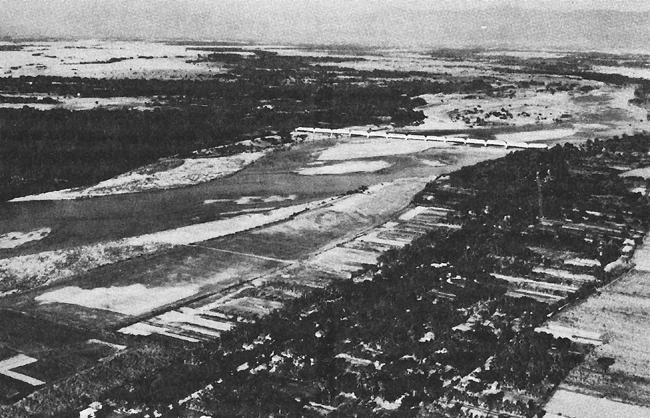
This barrio probably exceeds all barrios and towns of Pangasinan in popularity in the entire Luzon. It is the terminal of buses and jeeps going to the north; like Ilocos Sur, La Union, Ilocos Norte, ang Benguet: to the south; Pampanga, Manila, Laguna: to the east; Nueva Viscaya, Isabela: and Bayambang, Lingayen to the west.
It is also known for the Carmen-Villasis bridge which was used strategically and built by the Americans to fight against the Japanese.(see left image, 1935 bridge, right image, the present bridge)
Wednesday, January 24, 2007
Nang maubos ang "tansan"

Kinakalawang man o bago ay napakahalaga na marami ka sapagkat nakasalalay dito ang mga oras sa pakikipaglaro sa mga kaibigan o kapitbahay.
Tinatawag naming "tansan" o iyong takip ng bote ng softdrinks o kaya'y beer (sa English, bottle crown). Naging bahagi ng buhay hindi lang ng mga mahilig sa softdrinks gaya ng Royal True Orange, Sprite, Coke, Pepsi Cola, Sarsi, Merienda, Mountain Dew, at San Miguel beer. Ito'y naging laruan ng mga bata noong wala pang "console games".
Paano pinapaglaruan iyong "tansan"? Kung sa kasino ang gamit ay mga "chips"; sa mga bata ay tansan.
Madalas magamit ang tansan na panaya sa "taksing" na kung saan ang bawat manlalaro ay maglalagay ng magkakaparehas ng bilang sa loob ng guhit na bilog sa lupa. Ang mga kasali ay mayroong tig-iisang bato na tinatawag na "pamatok". Maglalagay sila ng guhit na medyo malayo sa bilog. Ihahagis nila ang kani-kanilang pamatok palapitan sa may guhit para malaman kung sino ang mauuna na titira sa mga nakalatag na tansan sa loob ng bilog.
Mula sa guhit, titira ang unang manlalaro at ang lalabas na tansan sa bilog ay kanyang pag-aari. Hihinto lang siya ng pagtira kung walang nailabas. Susundan ito ng ibang mga manlalaro hanggang mailabas lahat ang tansan.
Ginagamit din ang tansan sa "kara krus".
Dahil halos lahat ng bata ay naglalaro nito, madalas maubusan ng tansan sa barrio na kung saan saan na ay naghahanap. Oo, sa basurahan ang bagsakan ng mga bata.
Parang pera ang halaga ng tansan noon. Hindi pa ring maipaliwanag kung bakit kahit kinakalawang ay itinuturing pa ring magandang pampalipas oras.
Tuesday, January 23, 2007
Bakit pinaghatian ang gagamba?
 "Jay, maghahanap tayo ng gagamba bukas para may ipanlaban tayo.", sambit ni Toyong.
"Sige, ihahanda ko ang dalawang kahon ng posporo.", wika ni Jay.
"Sama din ako sa inyo, wala na yata akong gagamba kaya di na ako masaya", bigkas ni Richard.
Kinabukasan ay sumama ako kina Jay, Toyong, at Richard tungo sa Palaris, Asingan. Maaninag sa aming mga mata ang kagalakan sa paglalakad patungo sa kabukiran na may mga puno ng bayabas sa gilid. Habang dumadaan kami sa "tambak" ay inuumpisan na namin ang paghahanap.
Sina Toyong at Jay ay nagtungo sa kanluran na kung saan ay maraming malilit na bayabas at siguradong may mahahanap sila doon. Pumunta naman kami ni Richard sa may mga talahib. Hindi gaanong malayo sa dalawa na napapakinggan namin ang kanilang tinig.
Masarap ang simoy ng hangin sa lugar na iyon ngunit damang-dama namin ang hirap ng pag-apak sa putikan sapagkat katatapos lang ng buhos ng ulan. Gayundin, inalis na namin ang aming tsinelas dahil medyo malalim ang putik.
Una naming hinahanap ay ang saput na iniwan ng gagamba. Ginagamit ng gagamba ang saput sa paglipatlipat ng lugar. Samakatwid, susundan namin ang saput dahil kung saan magwawakas ito ay nandoon ang gagamba.
Sa aming paglipatlipat ng dahon ng talahib na may saput ay biglang.
"Akin ang gagambang iyan!", galit na galit si Toyong.
"Anong iyo, ako ang nakahanap!", sigaw ni Jay.
"Ibigay mo sa akin yan, kung hindi....", sagot ni Toyong. "Ako ang nakahanap ng saput, tinulungan mo lang ako".
Ipinipilit pa rin ni Jay na dahil siya ang nakahanap ng mismong gagamba ay pag-aari niya ito. Nasundan niya ang saput na unang natagpuan ni Toyong.
"Huwag na kayong mag-away. Jay, heto may nahanap ako. Ibigay mo na iyan kay Toyong", mapagbigay na mga salita ni Richard.
Masayang-masaya kaming umuwi. May tig-iisa kaming gagamba.
Gagamba. Isa sa mga laro ng mga Pilipino na di maaring kalimutan. Mayroon tayong iba't ibang kuwento tungkol dito ngunit alam natin ang kagalakan na handog na laro. Isang pampalipas oras ng mga pinoy na sabi nga, "Only In The Philippines".
Monday, January 22, 2007
Life in the old days
 "The night came at last and darkness filled the house; except for the tiny needles of light that filtered through the walls from the sky, there was no other illumination. I found the small oil lamp where my father kept it in the bamboo rack under the homemade pillows. I lighted it and went to the kitchen...
We sat on the floor and ate in the twilight with our bare hands. We spread the salted fish on the steaming rice and soaked it with broth from the vegetable pot. When we finished eating my father started washing the polished coconut shells which had been our plates and drinking cups for many generations."
page 11, America is in the Heart
It still amazes me everytime I read the book of Carlos Bulosan. He described what happens in detail and in order. I'm just thankful that I haven't experience that much of the life without electricity though I'd grown up in a "barrio" which was no flourescent light at all and I'm lucky enough not to use coconut shells as plates and cups.
We are now living in century which everything is available within our reach to comfort us, to make things leaner and easier. Bulosan recorded what was life in his generation.
Bonuan blue beach


Bonuan beach in Dagupan City is still one of the great beaches in the province. It was the first choice of tourists in the 70's and 80's. Thousands still visit here especially in the month of April and May.
With "inihaw na bangus" in your menu coupled with "oysters", Bonuan beach will be unforgetable.
Subscribe to:
Posts (Atom)


